

Creative writing boosts kids' confidence and creativity
Initial findings from an evaluation of Redfern's Sydney Story Factory reveal the value of creative writing experiences in fostering children's imagination and writing.

A recent Sydney Story Factory guest workshop with international bestselling author Markus Zusak. Image: Anthony Browell for Sydney Story Factory.
Established four years ago, Sydney Story Factory is a not-for-profit organisation that aims to nurture the creativity, confidence and wellbeing of young people, aged 7 to 17, through creative writing and storytelling workshops.
Designed particularly for Aboriginal and Torres Strait Islander students and children from non-English speaking backgrounds, Sydney Story Factory’s workshops are open to all, with each student receiving one-on-one assistance from volunteer tutors. Workshops are designed to foster creative thinking and engagement in learning, improve writing skills and boost confidence in a fun environment.
A team of academics from the University of Sydney’s Faculty of Education and Social Work is currently undertaking an evaluation of the impact of Sydney Story Factory workshops.
“The Sydney Story Factory evaluation focuses on the importance of creative writing in helping to develop children’s imagination, creativity, confidence and writing skills over time,” said Robyn Ewing AM, Vice President of Sydney Story Factory and Professor of Teacher Education and the Arts.
Strong creative thinking and learning skills are critical to students’ social and emotional wellbeing, academic achievement and lifelong learning
Professor Ewing is overseeing the research project undertaken by colleagues Associate Professor Jackie Manuel and Honorary Associate Professor David Smith. Researcher Amy Mortimer, a Sydney primary school teacher, will also complete her PhD on Sydney Story Factory later this year.
The team’s evaluation is underpinned by the five dimensions that research suggests are essential in fostering the development of creativity: inquisitiveness, imagination, collaboration, discipline and persistence.
Analysis of students’ writing samples, self-report questionnaires, student interviews and observation schedules are being used by the researchers to develop 10 case studies of children that will illustrate the flow-on effects of regular participation in Sydney Story Factory workshops over a minimum two-year period.
Early findings point to the positive impact of participation in Sydney Story Factory workshops for children, including:
- significant improvement in writing quality
- increased engagement with writing, for longer
- better planning, organisation and ideas
- enhanced ability to reflect and self-evaluate
- increased confidence to work with others, and
- more willingness to talk to people, particularly adults.
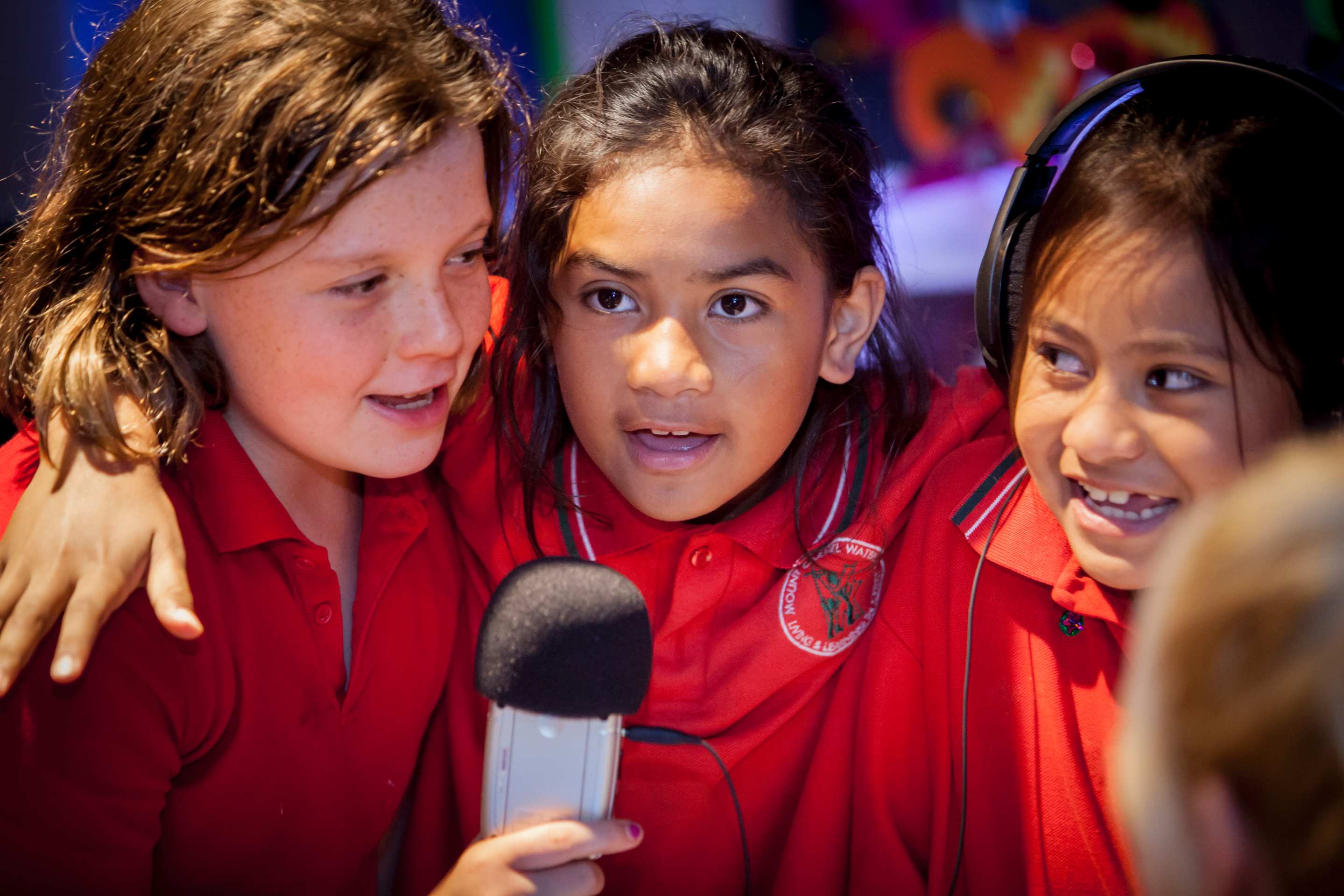
Children participating in a Sydney Story Factory workshop. Image: Anthony Browell for Sydney Story Factory.
Professor Ewing said these results had clear implications for current classroom approaches to creativity and problem-solving, and provided rich research-based evidence to transform how writing is taught in schools.
“In many schools storytelling and creative writing are not prioritised as much as they should be, given the emphasis on high-stakes tests like NAPLAN. These interim findings suggest that providing time for the creative writing process is imperative in every classroom. Strong creative thinking and learning skills are critical to students’ social and emotional wellbeing, academic achievement and lifelong learning,” she said.
“Sydney Story Factory provides a much-needed respite to the institutionalised, over-structured and often reductionist literacy focus currently being mandated by both state and federal governments.”
Preliminary findings from this evaluation and future research plans will be explored at a Sydney Ideas panel discussion on Wednesday 28 October. Sydney Story Factory: igniting creativity in children and young people one story at a time will explore how Sydney Story Factory is achieving its vision to help young people find their voice. The event will be chaired by Dr Catherine Keenan, Co-Founder and Executive Director of the Sydney Story Factory and Honorary Associate in the University of Sydney’s Faculty of Education and Social Work.
The Sydney Story Factory evaluation project will be completed in mid-2016.
Related articles
Surge in flu this winter
People suffering severe flu this winter should seek medical treatment as soon as possible.
Dementia tsunami: Alzheimer's and other dementias to triple by 2050
Governments need to take action on delaying the onset of Alzheimer's disease and other dementias, argues Associate Professor Lesley Russell.
Legalising medicinal cannabis would create $100 million industry
Analysis from the University of Sydney Business School has found that legalising medicinal cannabis in Australia could create a new industry worth more than $100 million per year.
Ready, set, Rio: Sydney cohort heads to the Games
As more than 3.5 billion people around the world turn their sights towards Rio this week, 30 athletes from our community are getting ready to take their place on the globe’s biggest sporting stage.
Science student makes greatest self-discovery at the University
'Leave your comfort zone' is Kevin Gatdula’s motto in life. With an emphasis on continual personal development, the 20-year-old Bachelor of Commerce and Science student believes that this is the only way to cultivate a journey of personal growth.
Learning never stops - but it starts at Open Day
Like so many high school students in their final year, Denise Ong had a head full of questions. Little did she know at the time that one question she asked would later lead to a major turning point in her story.
Australian study wants your view on personal genomic testing
Do you want to know about your genetic information? Would you share it?
Sydney at Rio: two silver and a bronze add to our tally
In a blockbuster first week at Rio 2016 our athletes have continued to excel winning two silver and a bronze to add to Chloe Dalton's gold in the Rugby Sevens. Our total would see us sitting at 35th on the country tally rankings – ahead of Ireland, Slovenia and Romania.
Future research stars supported under new Sydney fellowship
The first cohort of fellows of the University's new Sydney Research Accelerator (SOAR) program has been announced.
Sydney tops the state for graduate employability
The University of Sydney has been ranked number one in New South Wales and 49 in the world in the most recent Times Higher Education Global Employability University Rankings.